
Advising RIAs and broker-dealers on evaluating, procuring, and deploying the right AI-enabled technology.
Independent AI strategy and procurement consulting for financial services firms that want to scale with confidence.

-
AI uncertainty and lack of strategy
Many firms want to leverage AI but do not have a clear roadmap for implementation and struggle to separate meaningful solutions from the noise.
-
Inefficient vendor procurement
Firms often select vendors based on brand recognition, relationships, polished demos, or surface-level features leading to poor fit, weak adoption, hidden limitations, and expensive replacement projects later.
-
Hidden total cost of ownership (TCO)
Subscription pricing rarely tells the full story. Implementation, migration, storage, support, data exports, internal labor, and switching costs can materially change the economics of a vendor decision.
-
Vendor-led buying
Without a structured process, firms can be pulled into vendor-controlled demos, timelines, pricing conversations, and contract negotiations before requirements are clearly defined.
-
Poor implementation planning
Many firms focus on selecting the vendor but underestimate migration, training, workflow design, legacy vendor overlap, and change management after signature.
The business impacts of better strategy and procurement
-
Improved scalability
The right AI-enabled technology helps enable scalable growth without proportional headcount increases in operational roles.
-
Reduced vendor sprawl
Eliminate redundant systems and disconnected point solutions so your firm can operate with fewer vendors, cleaner workflows, lower costs, and clearer accountability.
-
Lower total cost of ownership (TCO)
Reduce the true long-term cost of your vendor stack by identifying hidden fees, renewal creep, overlapping tools, data charges, implementation costs, and operational drag before they compound.
-
Stronger compliance oversight
Evaluate vendors through the lens of supervision, books and records, cybersecurity, data retention, audit readiness, and regulatory risk—not just features and price.
-
Lower implementation risk
Identify migration, data, workflow, training, and ownership requirements upfront so new technology does not disrupt the business after the contract is signed.
-
Improved contract terms
Avoid unfavorable renewal language, restrictive termination clauses, aggressive price escalators, unclear service commitments, and vendor lock-in.
A structured, vendor-agnostic review of your current technology stack, operational workflows, and AI adoption opportunities to identify redundancy, risk, inefficiencies, scalability constraints, and the highest-priority areas for strategic improvement and procurement.
Typical scope
Review of current vendors, systems, and key service providers
Assessment of operational inefficiencies, vendor overlap, renewal exposure, and pricing risk
Identification of practical opportunities where AI-enabled technology could improve operational efficiency, scalability, automation, and workflow execution
Identification of near-term and longer-term technology and process improvement opportunities
Typical outputs
Technology Assessment Summary
Prioritized opportunity roadmap
Recommended actions for renewals, renegotiations, replacements, or consolidation
An ongoing partnership where Stevenson Procurement serves as an independent procurement lead across your vendor stack—supporting evaluations, renewals, consolidations, and negotiation strategy over time.
Typical scope
Intake and prioritization of procurement initiatives
Development of a repeatable procurement process
Ongoing vendor evaluations and second opinions
Renewal planning and negotiation support
Cross-functional stakeholder coordination
Periodic stack reviews and market updates
Typical outputs
Procurement process framework
Monthly & Quarterly priorities and planning support
Decision support memos
Renewal and negotiation tracking
End-to-end guidance to help your firm evaluate and select the right vendor for a specific category, with an independent recommendation you can defend internally.
Typical scope
Requirements and success criteria definition
Market scan and shortlist development
Structured vendor evaluation
Stakeholder alignment and decision support
Pricing and commercial review support
Typical outputs
Requirements summary
Vendor comparison framework
Recommendation memo
Negotiation guidance
A consolidation-focused engagement designed to reduce vendor sprawl, streamline workflows, and evaluate whether a more unified operating model makes sense for your firm.
Typical scope
Review of overlapping systems, vendors, and manual workarounds
Assessment of what to keep, replace, or consolidate
Evaluation of sequencing, dependencies, and implementation considerations
Development of a business case around cost, risk, and operating impact
Typical outputs
Consolidation strategy summary
Target-state recommendations
Phased roadmap for vendor consolidation and transition
Business case support for internal decision-making
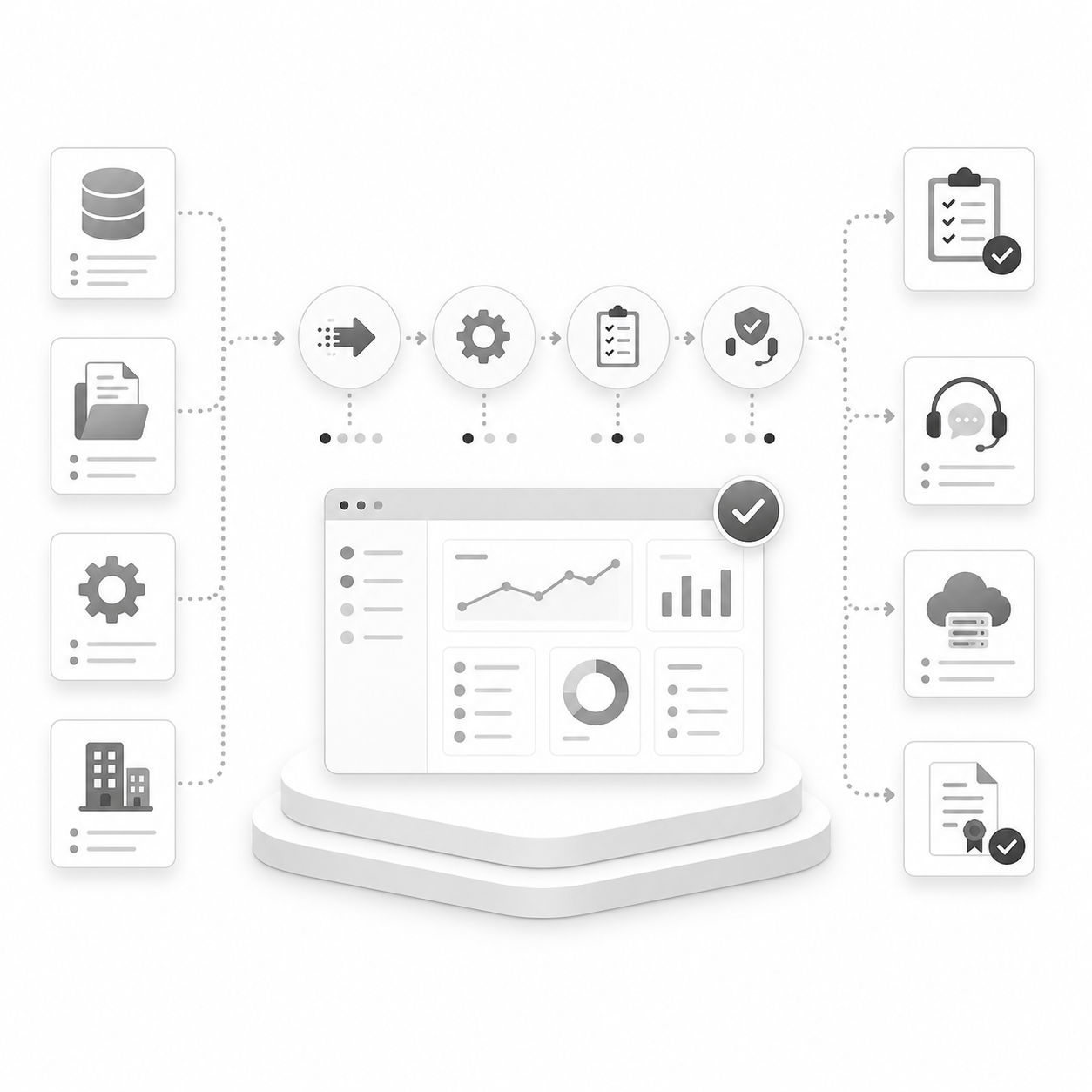
Independent transition support to help your team move from vendor selection into implementation with clearer planning, stronger governance, and better vendor accountability.
Typical scope
Implementation planning and milestone mapping
Governance support, including roles, cadence, and escalation paths
Coordination around migration and integration readiness at a high level
Change management support for communication, training, and adoption
Risk and issue tracking support
Typical outputs
Transition plan
Implementation governance outline
Risk and issue tracker
Go-live readiness support
-
1. Identify the problem & business objective
Start by defining what the firm is trying to solve and why it matters.
-
2. Assess the current state
Before going to market, understand the firm’s existing vendor stack, contracts, workflows, and pain points.
-
3. Define requirements & evaluation criteria
Turn the business need into a clear buying framework before speaking with vendors.
-
4. Research, shortlist & evaluate vendors
Run a structured market process that keeps the firm in control instead of letting vendors drive the sale.
-
5. Build the business case & complete due diligence
Move from “preferred vendor” to a defensible internal decision.
-
6. Negotiate, approve & execute
Finalize the deal while protecting the firm commercially, operationally, and legally.
Stevenson Procurement helps RIAs and broker-dealers make smarter technology buying decisions through a structured, independent strategy & procurement process.
We bring hands-on experience from both the firm side and the AI fintech side, helping firms define requirements, evaluate vendors, align stakeholders, negotiate better terms, and prepare for successful implementation.
Our role is simple: help your firm choose technology that fits today and scales for tomorrow.


A message from the founder
I started Stevenson Procurement because I saw how time-consuming and inefficient technology strategy, vendor evaluation, and procurement can be for RIAs and broker-dealers.
Having worked on both the firm side and the fintech sales side — including at multiple AI-enabled technology providers — I’ve developed a uniquely practical perspective on where buying processes break down and why firms often end up with the wrong vendors or unfavorable contracts.
Today, firms are being asked to navigate an increasingly crowded and rapidly evolving technology landscape. They are expected to evaluate competing vendor claims, understand the operational and compliance implications of AI-enabled technology, sit through endless demos, compare complex proposals, and make long-term strategic decisions — often without a structured procurement process.
Stevenson Procurement was built to bring more clarity, discipline, and confidence to that process.
Our goal is to help firms understand the problems worth solving, map the landscape of options available to solve them, evaluate vendors objectively, and negotiate from a position of strength so they deploy solutions that support their long-term strategy and scalability.
Thank you,
Ryan